
Rajneesh Singh — Head (Business Development, E-Commerce)
Festive-season logistics is no longer just about moving more parcels, it’s about orchestrating every movement with speed, precision, and agility.
India’s festive shopping season is no longer just a test of how many orders online marketplaces can generate. It is also a test of how efficiently those orders can move through warehouses, sorting facilities, transportation networks and delivery operations.
As demand rises across metropolitan areas and smaller cities, businesses must prepare for more than a short-lived sales spike. They need to coordinate inventory, parcel sorting, workforce and transport capacity as volumes rise sharply.
For logistics teams, the challenge is increasingly about managing several connected operations at once. A warehouse can process orders quickly, but delays in dispatch, line-haul transportation or delivery can still affect the customer experience. That is why e-commerce logistics is becoming a critical part of festive-season readiness.
Table of Contents
The Festive E-commerce Peak is getting Bigger — and more Complex
India’s online retail market continues to expand, increasing the scale of seasonal demand that logistics networks must handle. At the same time, festive sales are no longer concentrated in a handful of large cities.
Industry estimates put India’s online retail market at more than US$90 billion (₹8.72 lakh crore) in 2026, with projected growth of around 22–24%. This expansion is increasing the volume of goods that businesses need to store, process and deliver, particularly during major shopping events.
The festive outlook is equally significant. A 2026 forecast from Datum Intelligence projected approximately 966 million orders during the festive period, compared with around 760 million in 2025. The forecast also estimated festive gross merchandise value (GMV) of ₹1.50 — 1.55 lakh crore.
The previous festive season provides a useful indication of the operational pressure involved. According to Redseer Strategy Consultants, the first 11 days of India’s 2025 festive e-commerce sale generated approximately ₹60,000–₹62,000 crore in GMV, nearly 3.5 times business-as-usual levels. Around 90 million shoppers participated during this period.
Redseer also estimated that 60–65% of shoppers during those first 11 days came from Tier-2 and beyond cities. This wider geographic spread matters because orders must be fulfilled across different locations, each with its own inventory requirements, transportation connections and delivery timelines.
These figures highlight two operational realities. First, demand can rise dramatically within a short window. Second, orders originate across a broad geography, making inventory positioning, transportation planning and delivery coordination increasingly important.
For businesses, preparing for festive demand therefore requires more than additional warehouse space or delivery vehicles. It requires a connected e-commerce supply chain that can respond as order volumes and delivery requirements change.
Source: Redseer — E-commerce Festive Sale Trends: First Leg (11 Days), 6 October 2025
Why Festive Logistics cannot be planned around One Peak
Festive demand may appear to be a single event on the retail calendar, but the operational pressure builds and shifts over time. Different categories, customer groups and sales campaigns can create several waves of demand.
A network planned around one peak day may struggle when orders rise earlier than expected, remain elevated for longer or shift towards different locations.
This is where peak season logistics planning becomes important. Teams need to consider not only expected order volumes, but also the timing of demand, the locations from which orders originate, product availability and the time required to move parcels through each stage of fulfilment.
The Five Waves of Festive demand
- Pre-festive build-up
Inventory moves closer to demand centres, warehouses prepare for higher throughput, and businesses review staffing and transportation capacity. Forecasting and stock positioning during this phase influence how quickly orders can be processed once sales begin.
- Early-access sales
Loyalty programmes and early-access offers can create concentrated order volumes before the main sale opens. Logistics teams must be ready to handle these orders without disrupting planned inventory allocation or regular dispatch schedules.
- The main sale peak
High order volumes put pressure on picking, packing, sorting, dispatch and transportation. Small delays at one stage can quickly affect the flow of parcels through the rest of the network.
- Extended demand
Demand does not always fall immediately after the main sale. Promotions, delayed purchases and category-specific buying patterns can keep operations busy beyond the initial peak.
- Returns and reverse movement
After deliveries, some products come back into the network for exchange, return, inspection or restocking. Efficient reverse logistics helps businesses manage these movements while maintaining visibility over returned inventory.
Together, these waves show why festive readiness must extend beyond the opening days of a sale. Planning needs to account for the full movement of goods, from inventory positioning to final delivery and returns.
From Capacity Planning to Flow Orchestration
Adding space, labour or vehicles can help businesses absorb a surge, but capacity alone does not guarantee smooth operations. The different parts of a logistics network must work together.
Effective warehouse capacity planning considers expected throughput, storage requirements, workforce availability, dispatch schedules and the time needed to replenish fast-moving inventory. It also needs to account for the connections between warehouse activity and transportation capacity.
For example, if orders are picked and packed faster than outbound vehicles can collect them, parcels begin to accumulate at the dispatch area. Similarly, if transportation capacity is available but inventory is not positioned close enough to demand, the network may struggle to meet delivery commitments.
This is why logistics management during the festive period increasingly depends on coordinating warehouse operations, transportation, inventory and delivery performance rather than optimising each activity in isolation.
Operational visibility also matters. Teams need timely information about order backlogs, dispatch delays, vehicle availability and delivery performance so they can identify bottlenecks and respond before they spread across the network.
How Flow Orchestration helps during Festive Peaks
Flow orchestration focuses on how goods move through a network, rather than treating every facility or activity as a separate operation.
It brings together information about incoming inventory, order demand, parcel volumes, sorting capacity and onward transportation. With a clearer view of these connected activities, teams can make better decisions about where goods should move next and how available capacity should be used.
During a festive sale, this can help logistics teams identify congestion earlier, prioritise time-sensitive movements and coordinate dispatches with available transportation.
It also helps businesses respond to changing demand patterns. If a particular location experiences a larger-than-expected surge, operations teams can review inventory allocation and movement plans rather than relying entirely on the assumptions made before the sale.
In practice, effective flow orchestration depends on accurate operational data, clearly defined processes and coordination between the people managing inventory, warehouses and transportation.
The role of Sort Centres and faster Parcel Movement
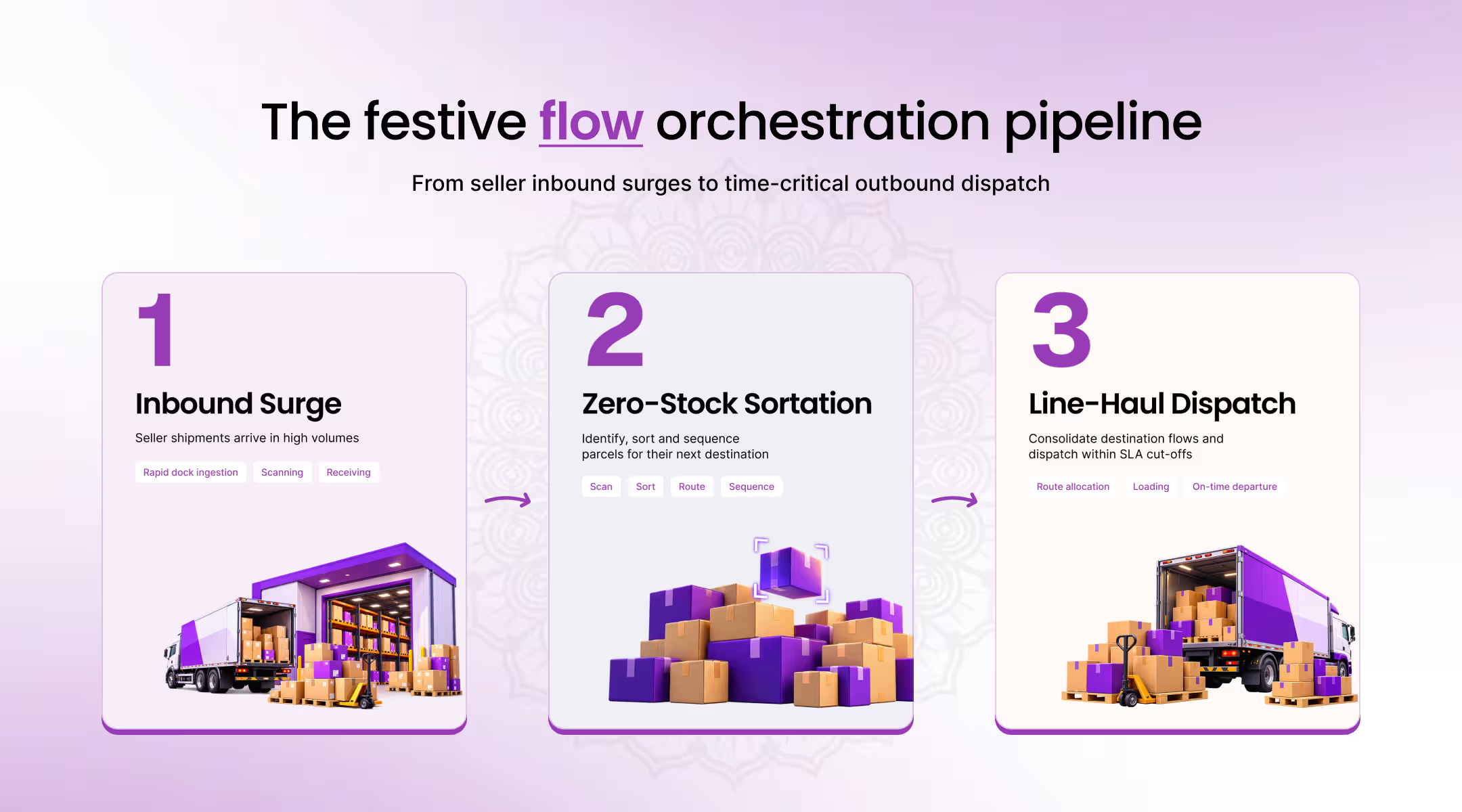
Sorting facilities play an important role in moving parcels from consolidated inbound flows towards their next destinations. During periods of high demand, the speed at which parcels are received, sorted and dispatched can influence the performance of the wider network.
Where the operating model supports it, cross-docking or direct-flow processes can reduce unnecessary storage and handling by moving suitable shipments through a facility towards onward transportation.
These approaches do not eliminate the need for warehousing. Instead, they help businesses determine which goods need to be stored and which can move through the network with minimal dwell time.
The objective is to reduce avoidable delays between inbound receipt, sorting and dispatch while keeping parcel visibility and operational control intact.
What Festive Season Sale logistics requires
Strong festive season logistics depends on preparing the network for variability, not just planning for a forecast number of orders. Businesses need to consider how demand will affect every stage of the operation.
Several areas deserve particular attention:
- Warehouse capacity planning: Align space, labour, picking capacity and dispatch resources with anticipated demand.
- E-commerce fulfilment: Coordinate order processing, picking, packing and handover to transportation so that warehouse throughput translates into timely dispatch.
- Last-mile delivery: Plan delivery capacity around the locations and service expectations of customers, particularly when order volumes rise across a wider geographic area.
- Reverse logistics: Prepare processes for returns, exchanges and returned inventory instead of treating reverse movement as an afterthought.
- Logistics management: Maintain visibility across warehouse and transportation operations, with clear escalation processes when delays or bottlenecks occur.
These activities are interconnected. Faster picking has limited value if parcels cannot leave the facility on time, while additional vehicles alone cannot solve delays caused by inventory shortages or warehouse congestion.
A coordinated plan helps businesses balance these dependencies and adapt as the festive season unfolds.
Apollo Supply Chain: Readiness is about more than Capacity
For a logistics partner, festive readiness involves more than preparing facilities and transportation resources in advance. It also requires the operational processes and visibility needed to manage changing volumes across the network.
Apollo Supply Chain supports businesses through integrated logistics capabilities spanning warehousing, transportation, fulfilment and technology-enabled operations. These capabilities help connect inventory movement with warehouse execution and distribution requirements.
During high-demand periods, the ability to coordinate these activities is particularly important. Businesses need to understand where orders are moving, where capacity is under pressure and which operational decisions can help maintain the flow of goods through the network.
An integrated approach to e-commerce logistics can help businesses prepare for changing order patterns while maintaining operational visibility across the movement of goods.
Apollo Supply Chain X Leading E-commerce Platform: A Practical Example of Peak Readiness
Apollo Supply Chain’s work with a major Indian e-commerce marketplace and social commerce platform, offers an example of network operations supporting e-commerce movement across multiple locations.
The operating network included Surat, Sonipat, Bareilly and Patna. Across this network, Apollo Supply Chain recorded a year-to-date volume of ₹163.66 million, reflecting the scale of activity handled across these locations.
The broader operational lesson is that e-commerce performance depends on more than processing orders at individual facilities. It also depends on coordinating movement across locations and aligning network operations with the requirements of the business.
As volumes rise during festive sales, this coordination becomes increasingly important to maintaining flow across the logistics network.
The Bigger Lesson: Plan for Movement, Not Just Volume
Festive sales will continue to test how effectively businesses can connect inventory, warehouse operations, sorting, transportation and delivery.
The challenge is not simply to accommodate more orders. It is to ensure that each stage can handle its share of the workload without creating bottlenecks elsewhere in the network.
For businesses preparing for the next demand surge, the priority should be a connected operating plan: realistic forecasts, well-positioned inventory, flexible capacity, clear operational visibility and coordinated movement between facilities.
When these elements work together, logistics can do more than absorb the festive rush. It can help businesses deliver a more reliable customer experience as demand changes.
Frequently Asked Questions (FAQs)
What is festive e-commerce logistics?
Festive e-commerce logistics involves managing the storage, processing, sorting, transportation and delivery of online orders during high-demand shopping periods. It also includes planning for inventory availability, delivery exceptions and product returns to help businesses manage seasonal demand effectively.
Why is peak-season logistics planning important for e-commerce businesses?
Peak-season logistics planning helps businesses prepare for sudden increases in order volumes, changing demand patterns and wider delivery requirements. It allows teams to align warehouse capacity, workforce availability, inventory positioning and transportation resources while identifying potential bottlenecks before they disrupt operations.
What is flow orchestration in e-commerce logistics?
Flow orchestration is the coordination of inventory, warehouse operations, sorting, transportation and delivery across a logistics network. Rather than managing each activity separately, it helps teams understand how goods move between stages, identify congestion and make operational decisions based on available capacity and demand.
How can businesses improve warehouse efficiency during festive sales?
Businesses can improve warehouse efficiency by forecasting demand, positioning fast-moving inventory appropriately, aligning staffing with expected volumes and coordinating picking, packing and dispatch schedules. They should also monitor backlogs and outbound transportation capacity so that faster warehouse processing does not create congestion at the dispatch stage.
What role do sorting centres play during the festive season?
Sorting centres help consolidate incoming parcels, organise shipments by destination and prepare them for onward transportation. Efficient sorting and dispatch processes can reduce avoidable delays between inbound receipt and the next stage of delivery. Where suitable, cross-docking can also help eligible shipments move through a facility with less storage and handling.
Why is reverse logistics important during festive e-commerce sales?
Resilience does not mean replacing lean and cost-efficient operations. Instead, businesses can identify critical points where flexibility, alternative capacity, inventory visibility and contingency planning are necessary while continuing to optimize routine operations.
Reverse logistics manages the movement of returned products through processes such as collection, inspection, exchange and restocking. Planning for returns is important because product movement continues after the main sales peak. Clear processes and inventory visibility help businesses manage returned goods without losing track of their status or availability.