Table of Contents
Every vehicle on the road depends on a supply chain that begins long before it reaches a customer. Raw materials, components, electronic systems, engines, tyres and spare parts must move through a highly coordinated network of suppliers, manufacturers, warehouses, dealers and service centres.
This is where automotive supply chain management plays an important role. It brings together sourcing, production, inventory, transportation, warehousing and distribution to ensure that the right materials and products reach the right place at the right time.
Unlike a conventional supply chain, the automotive supply chain operates with strict production schedules, thousands of components and demanding delivery requirements. Even a delay involving one critical part can affect manufacturing, vehicle deliveries or aftersales service.
What is automotive supply chain management?
Automotive supply chain management is the process of planning, coordinating and optimizing the movement of materials, components, finished vehicles and spare parts across the automotive industry.
It covers multiple stages, including:
- Sourcing raw materials and components
- Coordinating tier-1 and tier-2 suppliers
- Moving parts to manufacturing facilities
- Managing production-related inventory
- Storing and distributing finished vehicles
- Supplying spare parts to dealers and service centres
- Supporting repairs, maintenance and aftermarket operations
In simple terms, it connects every stage involved in building, delivering and maintaining a vehicle.
The objective is not only to keep materials moving. It is also to maintain production continuity, control inventory costs, improve visibility and respond quickly when demand or supply conditions change.
How does the automotive supply chain work?
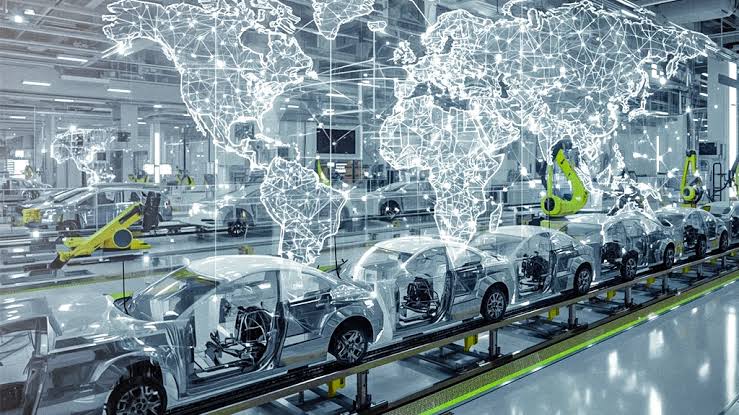
The automotive supply chain generally follows a connected flow from suppliers to manufacturers and, eventually, customers.
1. Raw Material and Component Sourcing
The process begins with the sourcing of raw materials and components such as steel, aluminium, plastics, glass, tyres, batteries, electronic systems and mechanical parts.
Automotive manufacturers often work with a large network of suppliers. Some provide complete systems, while others manufacture smaller components that are later assembled into larger modules.
Because many components are sourced from different regions, supplier coordination and transportation planning are essential from the beginning.
2. Supplier Coordination
Automotive manufacturers depend on tier-1 suppliers for major systems and assemblies, while tier-2 and tier-3 suppliers provide individual components and sub-components.
A disruption at any level can affect the wider network. Therefore, manufacturers and suppliers need to coordinate production schedules, quality requirements, delivery timelines and inventory availability.
Clear communication and reliable information flow help businesses identify potential shortages before they affect production.
3. Transportation to Manufacturing Facilities
Once components are ready, they must be transported to manufacturing plants according to planned delivery schedules.
Some parts may arrive through full truckload or less-than-truckload transportation, while others may require specialized handling, time-sensitive movement or dedicated delivery schedules.
The objective is to ensure that materials are available when required without creating unnecessary inventory at the plant.
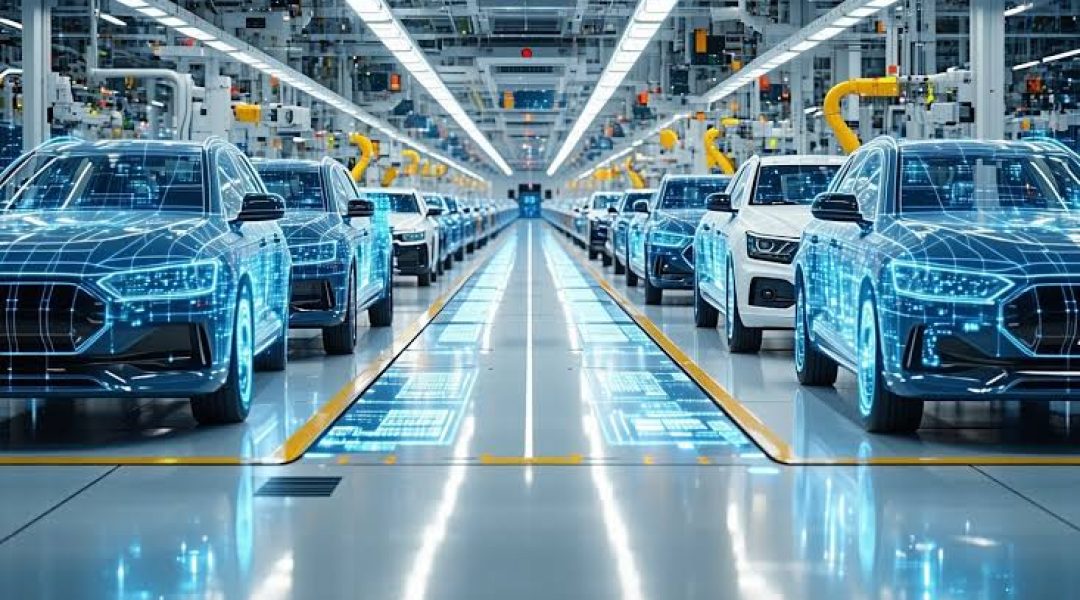
4. Vehicle Manufacturing and Assembly
At the manufacturing facility, components move through different production stages. The timing of each stage is closely connected to the availability of materials and parts.
Many automotive manufacturers use Just-in-Time (JIT) production, where components are delivered close to the time they are needed. This helps reduce inventory holding costs and makes better use of production space.
However, recent supply disruptions have also highlighted the importance of resilience. Businesses increasingly need to balance lean inventory practices with critical-component buffers, alternative suppliers and flexible logistics capacity.
5. Distribution of Finished Vehicles
After production, finished vehicles are moved to dealerships, distribution centres or other delivery locations.
This stage involves vehicle transportation, delivery scheduling, regional distribution and coordination with dealers. Delays at this stage can affect customer delivery commitments and dealership inventory.
6. Spare Parts and Aftermarket Distribution
The supply chain continues after a vehicle is sold. Spare parts must be stored, tracked and delivered to dealers, workshops and service centres.
This network often operates differently from vehicle production because aftermarket demand can be less predictable. A service requirement, accident or vehicle breakdown may create an urgent need for a particular part.
For this reason, aftermarket operations require accurate inventory visibility, regional stocking strategies and responsive transportation.
Why is the automotive supply chain so Complex?
Automotive supply chains are complex because they combine a large number of components, suppliers, locations and delivery requirements within one interconnected system.
A single vehicle may contain thousands of individual parts sourced from different suppliers. These parts must meet strict quality standards and arrive according to a carefully planned production sequence.
Several factors contribute to this complexity.
Large and Interconnected Supplier Networks
Manufacturers depend on multiple supplier tiers across different regions and countries. A problem involving one supplier can affect several downstream operations.
Precision-Based Production Schedules
Automotive manufacturing often follows tightly coordinated schedules. A missing component can delay a specific assembly stage or interrupt an entire production line.
Global Sourcing and Transportation Dependencies
International sourcing creates additional dependencies involving ports, customs, freight capacity, regulations and geopolitical conditions.
Multiple Inventory Requirements
Businesses must manage raw materials, work-in-progress inventory, finished vehicles and spare parts. Each category has different storage, handling and replenishment requirements.
Changing Customer Demand
Demand can vary by vehicle model, region, season, fuel type and technology. Electric vehicles, connected vehicles and changing consumer preferences also influence component requirements and distribution planning.
Separate Production and Aftermarket Networks
Vehicle manufacturing and spare-parts distribution operate with different demand patterns. Production is generally planned in advance, while aftermarket requirements may arise with little notice.
Key challenges in automotive supply chain management
Managing an automotive supply chain requires continuous coordination across suppliers, plants, warehouses, transporters and distribution partners.
Maintaining Production Continuity
The most immediate challenge is ensuring that production does not stop because of missing or delayed components.
Transportation delays, supplier shortages, quality issues and inaccurate inventory records can all affect manufacturing continuity.
Businesses therefore need dependable supplier coordination, contingency planning and timely visibility into material movement.
Balancing Inventory and Availability
Too much inventory increases storage and carrying costs. Too little inventory can create shortages and production delays.
The right balance depends on the importance of each component, lead times, demand patterns and the availability of alternative suppliers.
Critical components may require additional buffers, while regularly available parts can often be managed through leaner replenishment models.
Managing Transportation Costs and Capacity
Automotive logistics involves frequent movement between suppliers, plants, warehouses, dealers and service centres.
Businesses must manage transportation costs while meeting strict delivery schedules. Vehicle utilization, route planning, freight consolidation and flexible capacity can all influence operational efficiency.
Improving End-to-End Visibility
When multiple suppliers and logistics partners are involved, it can be difficult to understand where materials are located and whether they will arrive on time.
Without reliable visibility, businesses may respond to disruptions only after they have already affected operations.
Connected systems, shipment tracking, inventory information and centralized monitoring can help teams identify issues earlier and coordinate corrective action.
Supporting Aftermarket Availability
Spare-parts networks must maintain the right products across multiple locations without creating excessive inventory.
A part that is unavailable when needed can delay repairs and affect customer satisfaction. At the same time, storing every part at every location may not be commercially practical.
This makes inventory positioning, demand forecasting and responsive distribution particularly important.
The role of logistics in automotive supply chain management
Logistics connects the different stages of the automotive supply chain and helps ensure that materials, vehicles and spare parts move efficiently.
Transportation Management
Transportation management covers the movement of components from suppliers to plants, finished vehicles to dealerships and spare parts to service locations.
Effective transportation planning helps businesses improve delivery reliability, optimize routes, manage vehicle capacity and respond to changing requirements.
Automotive Warehousing
Warehouses support several activities, including component storage, inventory control, sequencing, kitting, order fulfilment and spare-parts distribution.
Automotive warehousing must often handle different product sizes, packaging formats, storage conditions and dispatch priorities. Accurate inventory records are essential because even a small mismatch can affect production or service operations.
Inventory and Distribution Management
Inventory management helps businesses maintain the right quantity of components and spare parts at the right locations.
Distribution management, meanwhile, ensures that products move from warehouses to manufacturing plants, dealers or service centres according to operational requirements.
Together, these activities help reduce unnecessary movement, improve availability and control logistics costs.
Control Tower and Analytics Solutions
Control tower and analytics solutions provide a centralized view of supply chain activity.
They can bring together information about shipments, inventory, orders, transportation and operational performance. This helps teams monitor exceptions, identify delays and coordinate decisions across different stakeholders.
The value of these systems is not only in tracking movement. It is also in helping businesses understand what is happening across the network and respond before a disruption becomes more serious.
Automotive Supply Chain in the aftermarket
The automotive supply chain does not end when a vehicle reaches the customer. Aftermarket operations support the vehicle throughout its service life.
The aftermarket includes:
- Spare-parts distribution
- Dealer and workshop replenishment
- Vehicle repair and maintenance
- Warranty-related parts movement
- Replacement components
- Emergency and urgent-part deliveries
Production logistics usually follows a planned manufacturing schedule. Aftermarket logistics, on the other hand, must respond to more varied and unpredictable demand.
For example, a manufacturing plant may know when a component is required for assembly. A service centre may need a replacement part immediately because a vehicle has broken down.
To manage this difference, businesses need:
- Accurate spare-parts inventory records
- Regional inventory positioning
- Fast order processing
- Reliable dealer distribution
- Responsive transportation
- Better demand forecasting
- Visibility across warehouses and service locations
Strong aftermarket logistics can improve parts availability, reduce vehicle downtime and support a better customer experience.

How technology is changing automotive supply chains
Technology is becoming increasingly important in automotive supply chain management because businesses need faster access to accurate operational information.
Warehouse Management Systems
Warehouse Management Systems, or WMS, help businesses manage receiving, storage, inventory tracking, picking and dispatch activities.
In automotive operations, WMS can support component traceability, stock accuracy, sequencing and spare-parts fulfillment.
Transportation Management Systems
Transportation Management Systems, or TMS, help businesses plan shipments, allocate vehicles, optimize routes and monitor transportation performance.
They can also support better coordination between suppliers, warehouses, plants and delivery locations.
Demand Forecasting and Analytics
Analytics tools help businesses understand demand patterns, identify inventory risks and improve replenishment planning.
Better forecasting can reduce the likelihood of shortages while also limiting unnecessary inventory accumulation.
Real-Time Visibility
Real-time visibility helps teams monitor shipments, inventory movement and delivery exceptions.
When information is available across the network, businesses can identify delays earlier and coordinate with suppliers, transporters and receiving teams more effectively.
Artificial Intelligence and Predictive Decision-Making
Artificial intelligence can support demand forecasting, route optimization, exception management and predictive analysis.
However, technology delivers value only when it is supported by accurate data, reliable processes and coordinated teams. Digital tools should strengthen operational decision-making rather than operate separately from the wider supply chain.
How businesses can improve automotive supply chain Efficiency
Improving automotive supply chain performance requires attention across planning, logistics, inventory and supplier coordination.
Improve Supplier Collaboration
Regular communication with suppliers can help businesses identify risks, coordinate production schedules and respond to changes in demand.
Supplier performance monitoring can also highlight recurring issues involving quality, delivery reliability or lead times.
Build Flexible Logistics Capacity
Businesses should avoid depending entirely on one transportation route, supplier or logistics arrangement where alternatives are practical.
Flexible capacity, alternate routes and contingency planning can help reduce the impact of unexpected disruptions.
Optimize Inventory Positioning
Inventory should be positioned according to demand, lead times, component criticality and service requirements.
Critical parts may require additional buffers, while other products can be managed through more frequent replenishment and better demand visibility.
Strengthen Warehouse Processes
Improved warehouse layouts, accurate stock records, barcode or RFID-based tracking, standardized handling and better dispatch planning can reduce errors and delays.
For aftermarket operations, the location of spare parts within the network can be just as important as the total quantity held.
Use Integrated Technology
Connecting warehouse, transportation, inventory and order information can help businesses gain a more complete view of their operations.
This makes it easier to identify exceptions, coordinate responses and measure performance across the supply chain.
Monitor the Right Performance Indicators
Automotive businesses can track indicators such as:
- Supplier delivery performance
- Production line stoppages
- Inventory accuracy
- Order fulfilment time
- Transportation cost
- Vehicle utilization
- On-time delivery
- Spare-parts availability
- Warehouse productivity
These measurements help teams identify where improvements are needed and whether operational changes are delivering results.
When should businesses consider external supply chain support?
As automotive operations expand, managing every logistics activity internally can become more complex.
Businesses may consider external supply chain support when:
- Production expands across multiple locations
- Supplier networks become more geographically dispersed
- Spare-parts demand becomes difficult to forecast
- Warehousing capacity needs to increase
- Transportation requirements become more specialized
- Better inventory and shipment visibility is required
- Internal teams need additional operational expertise
- Logistics costs and delivery performance need improvement
The right logistics partner should offer relevant automotive experience, reliable infrastructure, technology-enabled visibility and the ability to coordinate multiple activities across the supply chain.
External support does not necessarily mean outsourcing every operation. Depending on business requirements, companies may use specialized partners for warehousing, transportation, 3PL, contract logistics, inventory management or aftermarket distribution.
How Apollo Supply Chain supports automotive Operations
Apollo Supply Chain supports automotive businesses with integrated warehousing, transportation, 3PL and supply chain solutions designed around the operational requirements of both production and aftermarket networks.
By combining logistics infrastructure, operational coordination and technology-enabled visibility, the focus is on helping businesses manage material movement, inventory and distribution more efficiently across their supply chains.
Conclusion
Automotive supply chain management connects suppliers, manufacturers, warehouses, transporters, dealers and service centres through one highly coordinated network.
Its role extends beyond moving components from one location to another. It helps businesses maintain production continuity, balance inventory, manage transportation, improve visibility and support the availability of spare parts after a vehicle is sold.
As automotive supply chains become more interconnected, businesses will need a combination of efficient processes, flexible logistics capacity, reliable technology and strong operational partnerships.
A well-managed automotive supply chain can help businesses respond to disruption, improve delivery reliability and support long-term growth across both manufacturing and aftermarket operations.
Frequently Asked Questions (FAQ's)
What is automotive supply chain management?
Automotive supply chain management is the process of coordinating the sourcing, production, storage, transportation and distribution of automotive components, vehicles and spare parts.
Why is supply chain management important in the automotive industry?
It helps maintain production continuity, control inventory costs, coordinate suppliers, improve delivery reliability and ensure that spare parts are available when required.
What are the main stages of an automotive supply chain?
The main stages include raw material sourcing, supplier coordination, transportation to manufacturing plants, vehicle assembly, finished-vehicle distribution and aftermarket spare-parts distribution.
What are the biggest challenges in automotive supply chains?
Common challenges include supplier delays, production interruptions, inventory imbalance, transportation constraints, demand fluctuations and limited end-to-end visibility.
What is the role of logistics in automotive supply chain management?
Logistics manages the movement and storage of components, finished vehicles and spare parts through transportation, warehousing, inventory management and distribution activities.
What is an automotive aftermarket supply chain?
An automotive aftermarket supply chain manages the movement of spare parts and related products after a vehicle has been sold. It supports dealers, workshops, service centres and vehicle owners.
How does technology improve automotive supply chains?
Technology can improve inventory accuracy, shipment visibility, demand forecasting, transportation planning, warehouse operations and exception management.
When should an automotive business consider a 3PL partner?
A business may consider a 3PL partner when it needs additional warehousing or transportation capacity, better visibility, specialized automotive expertise or support for expanding production and aftermarket networks.