Table of Contents
A business can grow quickly without its supply chain being ready for that growth.
New markets bring longer delivery routes. Higher order volumes put pressure on warehouses. More suppliers make coordination harder. At the same time, inventory decisions become more complex, transportation costs can rise, and systems that once worked well may start creating bottlenecks.
This is where supply chain consulting becomes valuable.
Rather than simply adding more warehouses, vehicles, inventory or people, supply chain consulting helps businesses understand what is actually limiting their growth. It looks at the supply chain as a connected system and identifies opportunities to improve network design, inventory, warehousing, transportation, technology and processes.
For Indian businesses operating across multiple markets, this becomes particularly important as supply chains become more distributed and customer expectations continue to rise.
Why business growth can make supply chains more complex
Growth changes the way a supply chain operates.
A company that previously served a few cities may eventually need a wider distribution network. A manufacturer may add suppliers, production locations and customers across different regions. An e-commerce or D2C business may move from a single fulfillment location to multiple warehouses to improve delivery speed.
Each decision creates new operational dependencies.
A warehouse located closer to customers may reduce transportation time but increase operating costs. Holding more inventory can improve product availability, but it also increases working capital. Adding suppliers can improve sourcing flexibility while making coordination more difficult.
As a result, scaling a business is not always about increasing capacity. Sometimes, the bigger opportunity lies in redesigning how the existing supply chain works.
What supply chain consulting actually addresses
Supply chain consulting services in India typically go beyond a single logistics activity. The objective is to understand how different parts of the supply chain interact and where changes can create measurable improvements.
Depending on the business and its requirements, this can involve several areas.
Supply chain network design
The structure of a supply chain has a direct impact on cost, service levels and responsiveness.
Consulting can help businesses evaluate the location and role of warehouses, distribution centres, fulfilment facilities and other nodes within their network. Network design or redesign can identify whether the existing footprint supports current demand and future expansion.
The goal is not simply to create a larger network, but to create one that is better aligned with the business.
Inventory optimization
Inventory has to balance two competing priorities: availability and cost.
Excess inventory can tie up working capital and increase storage requirements, while insufficient inventory can lead to stockouts and missed customer commitments.
Supply chain consulting can examine demand patterns, inventory policies, product characteristics and replenishment processes to identify opportunities for better inventory planning and control.
Warehouse optimization
Warehouses often become operational bottlenecks as businesses expand.
Issues such as inefficient layouts, unnecessary movement, poor space utilization, manual processes and disconnected systems can affect both cost and service levels.
Warehouse design, simulation and process improvement can help businesses determine how facilities should be structured and operated. Depending on the requirement, this may also involve warehouse technology, automation, inventory management and digital systems.
Transportation and route optimization
Transportation is another area where small inefficiencies can become significant at scale.
Changes in delivery volumes, customer locations, shipment patterns and vehicle utilization can affect transportation costs considerably. Route optimization and transportation analysis can help businesses identify more efficient ways to move goods while maintaining required service levels.
This becomes increasingly important for businesses managing complex multi-location distribution networks.
Supply chain digitalization and analytics
Technology can provide better visibility, but technology alone does not solve an inefficient process.
Consulting can help businesses identify where digital tools, analytics and connected systems can improve decision-making. This may include supply chain analytics, control towers, process digitalization, visibility solutions and data-driven operational planning.
The focus should remain on solving a business problem rather than implementing technology simply because it is available.
When should a business consider supply chain consulting?
There is no single point at which every company needs a consultant. However, certain situations are clear indicators that the existing supply chain may need a closer review.
A business may benefit from supply chain consulting when:
- It is expanding into new regions or markets.
- Logistics costs are increasing without a corresponding improvement in service.
- Inventory levels are growing faster than sales.
- Warehouses are running out of space or becoming difficult to operate.
- Delivery performance is inconsistent across locations.
- The existing distribution network no longer matches customer demand.
- Different supply chain functions operate in silos.
- Management lacks sufficient visibility into supply chain performance.
- A major network expansion, consolidation or redesign is being considered.
In these situations, the right question is not always, “What additional capacity do we need?”
It may instead be, “What needs to change in the way our supply chain is designed and managed?”
How supply chain consulting can support faster growth
A scalable supply chain should be able to support business growth without allowing complexity and cost to increase at the same pace.
That requires decisions to be made with a broader view of the operation.
For example, a network redesign may reduce unnecessary transportation while improving delivery coverage. Better inventory planning may reduce working capital requirements without compromising product availability. Warehouse optimization may create additional usable capacity without immediately requiring another facility.
These improvements are connected.
When network design, inventory, warehousing, transportation and technology are considered together, businesses can make more informed decisions about where to invest and what to change.
That is the real value of supply chain optimization: creating an operating model that can support growth more efficiently.
Why supply chain consulting is becoming more important in India
India’s business environment is becoming increasingly multi-location and digitally connected. Businesses are serving customers across wider geographies while dealing with changing demand, tighter delivery expectations and increasingly complex distribution requirements.
Manufacturers are expanding their sourcing and distribution networks. Retail and e-commerce businesses are managing omnichannel fulfillment. D2C brands are building logistics networks that can support direct customer delivery. At the same time, businesses across industries are looking for greater visibility and control over their supply chains.
As this complexity increases, supply chain decisions can no longer be made in isolation.
A warehouse decision can affect transportation. Transportation changes can affect inventory requirements. Network changes can affect customer service. Technology investments can influence how effectively the entire system is managed.
Supply chain consulting brings these decisions together and provides a structured way to evaluate them.
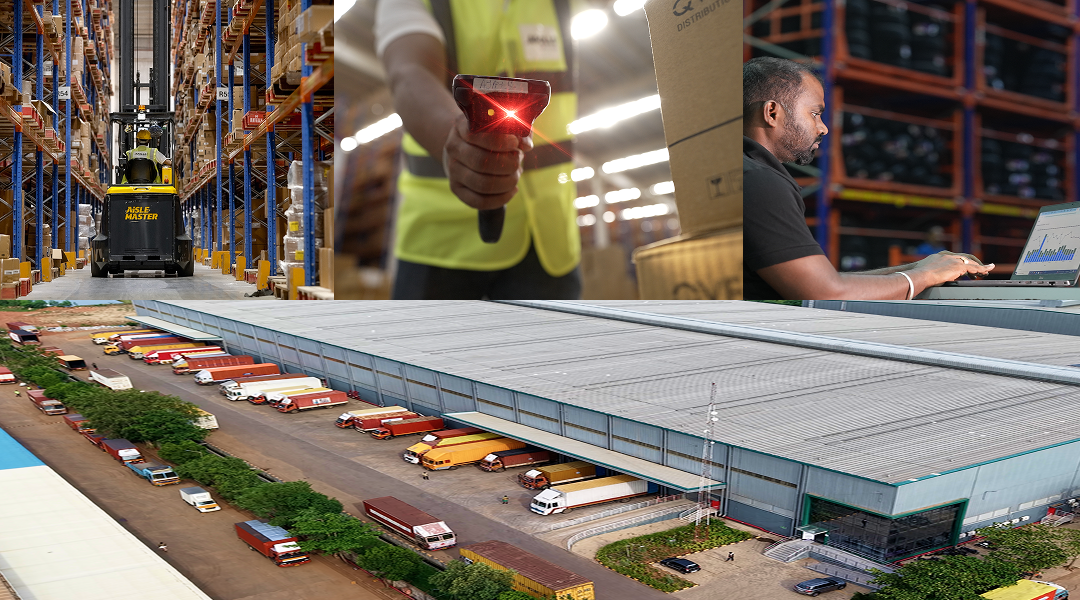
From supply chain complexity to a scalable operating model
The purpose of consulting is not simply to identify problems. It is to help businesses determine what their supply chain should look like as the business evolves.
That can involve redesigning the network, improving inventory policies, optimizing warehouses, reviewing transportation flows, strengthening processes or introducing better digital visibility.
The right approach depends on the company’s objectives, operating model and growth plans.
For some businesses, the priority may be cost optimization. For others, it could be improving service levels, expanding into new markets, increasing warehouse capacity or creating greater visibility across operations.
In each case, the starting point should be the same: understand the current supply chain, identify the constraints and build a practical roadmap for improvement.
How Apollo Supply Chain approaches supply chain consulting
At Apollo Supply Chain, supply chain consulting focuses on helping businesses evaluate and improve the way their supply chains are designed and operated.
Our capabilities include supply chain strategy, network design and redesign, route optimization, warehouse design and simulation, process improvement, supply chain digitalization, control tower solutions and data analytics.
By looking at these areas as connected parts of the supply chain, businesses can identify opportunities to improve operational efficiency, visibility and scalability.
For companies looking to review or optimize their supply chain, supply chain consulting services can provide a structured starting point for evaluating the network and identifying the changes required for sustainable growth.
Frequently Asked Questions (FAQ's)
What are supply chain consulting services?
Supply chain consulting services help businesses analyze and improve different parts of their supply chain, including network design, inventory, warehousing, transportation, processes, technology and analytics.
Why do businesses need supply chain consulting?
Businesses may need consulting when their supply chain becomes too complex to manage efficiently, particularly during expansion, network changes, rising logistics costs or changes in customer demand.
How can supply chain consulting help businesses scale?
Consulting can help businesses identify operational bottlenecks, optimize their network and resources, improve processes and create a supply chain structure that can support higher volumes and wider market coverage.
What does a supply chain consultant do?
A supply chain consultant evaluates how a company’s supply chain operates, identifies inefficiencies and develops recommendations for improving areas such as network design, inventory, warehousing, transportation and technology.
What is supply chain network design?
Supply chain network design involves evaluating the structure and location of facilities, distribution points and other supply chain nodes to determine how goods should flow through the network efficiently.
When should a company consider supply chain consulting?
A company should consider consulting when it is expanding, experiencing rising logistics costs, facing inventory or warehouse challenges, redesigning its network or looking for better visibility and operational control.
Can supply chain consulting reduce logistics costs?
It can identify opportunities to reduce unnecessary costs by improving network design, inventory planning, warehouse operations, transportation flows and other supply chain processes. The actual impact depends on the business and the changes implemented.
Does supply chain consulting include technology?
Yes. Depending on the requirement, consulting can include supply chain digitalization, analytics, visibility solutions, control towers and other technology-led improvements.
How do I choose a supply chain consulting company in India?
Businesses should evaluate a consulting partner based on its supply chain expertise, understanding of the relevant industry, analytical capabilities, implementation approach and ability to connect strategy with operational execution.
Does Apollo Supply Chain provide supply chain consulting services?
Yes. Apollo Supply Chain provides supply chain consulting capabilities covering areas such as network design, route optimization, warehouse design and simulation, process improvement, digitalization, control tower solutions and analytics.