
Rachit Mittal (Head – Operations, Automotive & Industrial)
The future of automotive logistics will be defined by the ability to anticipate change, adapt quickly and maintain visibility across the supply chain.
India’s automotive industry is entering a period of structural transformation. The shift towards electric vehicles, increasing localisation, expanding manufacturing capacity, evolving consumer expectations and greater integration with global supply chains are changing the way automotive businesses operate.
But growth alone is not the defining challenge.
The bigger question is whether automotive supply chains can remain resilient while the environment around them keeps changing.
For manufacturers, component suppliers and logistics partners, resilience increasingly means being able to respond to disruption without compromising production, inventory availability, delivery commitments or cost efficiency. A supply chain that works well only under stable conditions is no longer enough.
The future of automotive logistics will therefore depend not only on scale and efficiency, but also on visibility, flexibility and the ability to respond quickly when conditions change.
Table of Contents
India’s automotive industry is entering a new Phase
India’s automotive industry is entering a period of structural transformation. The country is already the 4th-largest automobile producer, with the automotive sector contributing approximately 7.1% of India’s GDP and around 49% of manufacturing GDP, while supporting nearly 30 million jobs.
The scale of the opportunity is also expanding. India’s automotive industry is estimated at approximately US$240–250 billion and is projected to cross US$300 billion by 2030. At the same time, the auto-components industry is expected to grow from around US$74 billion to approximately US$145 billion by 2030.
The transition towards electric mobility adds another dimension to this transformation. India’s EV market, currently estimated at around US$8–9 billion, is expected to exceed US$110 billion in the early 2030s, while the broader electric mobility ecosystem could approach US$600 billion by 2030.
At a Glance
| Automotive in India | Industry Context |
|---|---|
| Automobile production | 4th largest globally |
| Automotive contribution to GDP | ~7.1% |
| Share of manufacturing GDP | ~49% |
| Employment | ~30 million jobs |
| Automotive industry size | ~US$240–250 billion |
| Projected industry size by 2030 | US$300+ billion |
| Auto-components industry | ~US$74 billion |
| Auto-components target by 2030 | ~US$145 billion |
These numbers point to an industry that is not simply getting larger, but becoming more interconnected and more complex. As manufacturing expands, supply networks evolve and the transition to electric mobility accelerates, the logistics systems supporting the industry must also become more adaptable.
That makes resilience a strategic requirement—not just an operational advantage.
What is reshaping automotive supply chains?
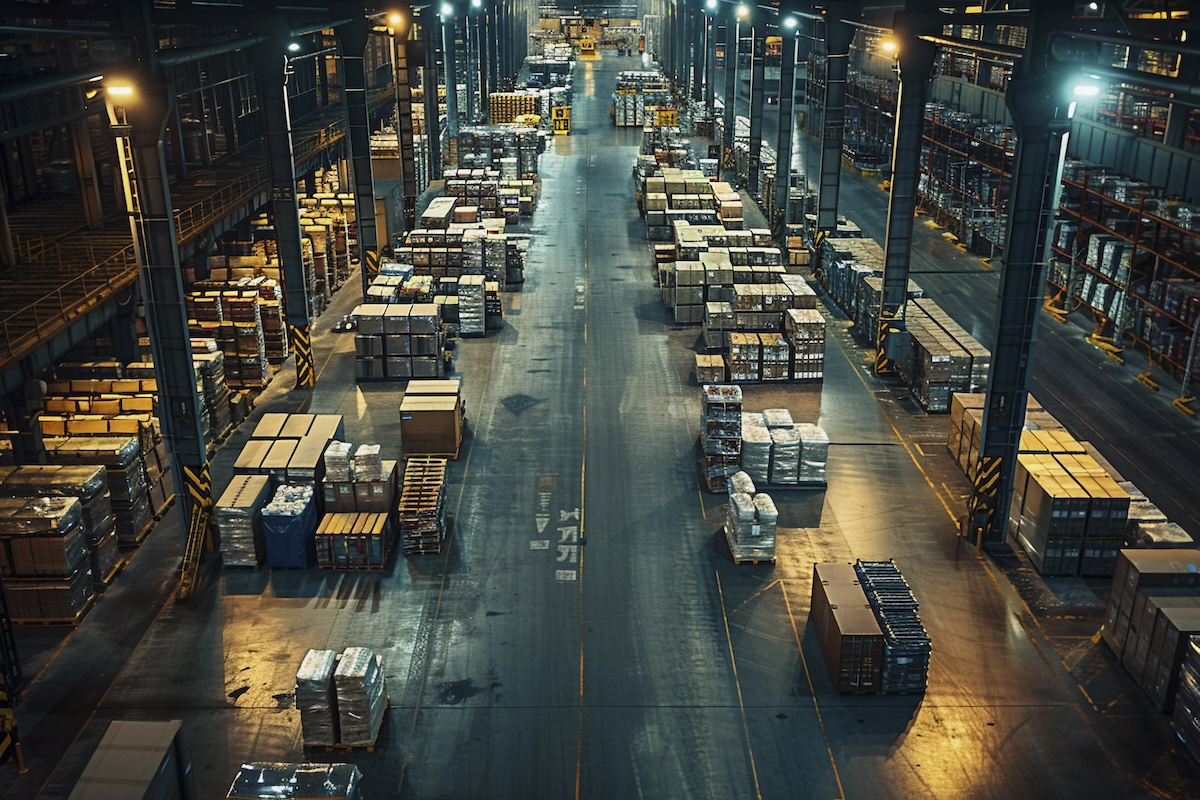
Several structural changes are influencing how automotive supply chains are being designed and managed.
The shift towards electric mobility
India’s electric mobility transition is particularly significant. The country has set ambitious 2030 adoption targets, including 30% for private cars, 70% for commercial vehicles and 80% for two- and three-wheelers. These targets have implications well beyond vehicle technology, affecting batteries, components, supplier networks, warehousing, transportation and distribution.
Increasing localisation
Localisation can reduce dependency on distant suppliers, but it also requires closer coordination between manufacturers, suppliers, warehouses and transportation networks.
As more components are sourced domestically, the ability to manage supplier flows, inventory and replenishment becomes increasingly important.
Geopolitical and supply-chain disruptions
Global disruptions have demonstrated how quickly a constraint in one part of the network can affect production elsewhere.
For automotive businesses, this makes flexibility particularly important. Alternative sourcing, inventory visibility, transportation flexibility and faster decision-making can help organisations respond when normal supply routes are affected.
Digitalisation
Technology is changing supply-chain visibility from periodic reporting to increasingly connected, real-time decision-making.
Warehouse Management Systems, Transportation Management Systems, analytics and control-tower capabilities can help organisations understand what is happening across the network and identify exceptions before they become larger operational problems.
From cost efficiency to supply chain Resilience
For many years, automotive logistics was heavily focused on efficiency: reduce inventory, optimize transportation, improve warehouse productivity and minimise logistics costs.
Those objectives remain important.
However, today’s supply chains also need to answer a different set of questions:
| Traditional focus | Emerging resilience focus |
|---|---|
| How efficiently can goods move? | How quickly can the network adapt? |
| How much inventory can be reduced? | What level of inventory protects continuity? |
| How can transport costs be lowered? | How flexible is the transportation network? |
| How can warehouse productivity improve? | Can capacity scale when demand changes? |
| How can performance be measured? | Can exceptions be identified early? |
The objective is not to replace efficiency with resilience.
It is to build resilience without losing operational discipline.
Technology is becoming part of the resilience Equation
Visibility is one of the foundations of a resilient automotive supply chain.
When inventory, transportation and warehouse activities are managed through disconnected systems, identifying the source of a disruption can take time. By contrast, connected technology can provide a more complete view of inventory movement, transportation status and operational exceptions.
Three capabilities are particularly relevant.
Warehouse Management Systems (WMS) can improve inventory accuracy, warehouse visibility and execution.
Transportation Management Systems (TMS) can support transport planning, scheduling and execution.
Control towers and analytics platforms can connect operational information across multiple functions and provide a clearer view of exceptions and network performance.
The value of these systems is not simply the technology itself. It lies in how quickly the organisation can turn information into action.
Building a more resilient automotive Supply Chain
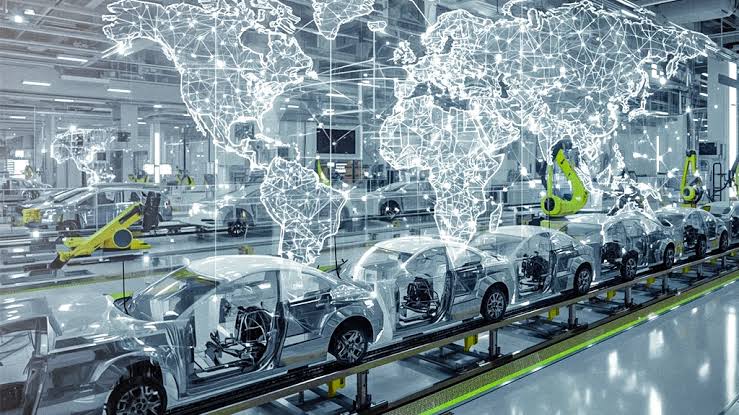
Resilience cannot be created through one technology or one logistics intervention. It requires an operating model that combines several capabilities.
1. Build network flexibility
Automotive businesses need logistics networks that can adapt to changing production volumes, sourcing patterns and market requirements.
2. Improve end-to-end visibility
Inventory and transportation visibility can help teams identify potential disruptions earlier and coordinate responses across functions.
3. Connect suppliers, warehouses and transportation
A resilient supply chain is not a collection of independent activities. Supplier flows, warehousing and transportation need to work as one connected network.
4. Design for both efficiency and continuity
Lean operations remain important, but resilience requires organisations to understand where flexibility and contingency capacity are necessary.
5. Use data to manage exceptions
The goal of digital supply-chain management is not to generate more dashboards. It is to help decision-makers identify exceptions, understand their impact and respond faster.
Apollo Supply Chain’s approach to automotive Logistics
For automotive businesses, resilience ultimately depends on how effectively these principles can be translated into day-to-day operations.
Apollo Supply Chain supports automotive and industrial businesses through an integrated logistics approach that brings together warehousing, transportation, technology and operational processes.
Its capabilities include technology-enabled warehousing, transportation management, control-tower visibility and scalable 3PL operations.
WMS capabilities support inventory visibility and warehouse execution. TMS capabilities support transportation planning and execution. Control-tower and analytics capabilities provide greater visibility across operational flows and help teams respond to exceptions.
A nationwide warehousing and transportation network can further support supplier integration, distribution and changing business requirements.
The objective is not simply to move automotive products from one location to another.
It is to create a logistics operating model that can remain responsive as the underlying supply chain changes.
The Road Ahead
India’s automotive opportunity is likely to be shaped by several forces at once: electric mobility, localisation, manufacturing expansion, exports, technology and changing global supply-chain dynamics.
This means automotive supply chains cannot be designed only around today’s operating conditions.
They need to be flexible enough to adapt to tomorrow’s.
The organisations that build this adaptability into their supply-chain and logistics models will be better positioned to manage disruption without losing sight of efficiency, service and growth.
The future of automotive logistics is not just about moving faster.
It is about building supply chains that can keep moving when conditions change.
Frequently Asked Questions (FAQ's)
What is automotive supply chain resilience?
Automotive supply chain resilience is the ability of a supply chain to anticipate, absorb and respond to disruptions while maintaining the flow of materials, components and finished vehicles. It depends on factors such as network flexibility, inventory visibility, supplier coordination, transportation resilience and technology-enabled decision-making.
Why is supply chain resilience important for the automotive industry?
Automotive manufacturing depends on closely coordinated supplier, production and distribution networks. A disruption affecting one component, supplier or transportation route can have wider operational consequences. Building resilience helps automotive businesses respond more effectively to changing market conditions and supply-chain disruptions.
How is the shift to electric vehicles changing automotive supply chains?
The transition to electric vehicles is introducing new requirements around batteries, electronics, specialised components, storage, transportation and supplier coordination. Automotive logistics networks therefore need to support both existing internal-combustion-engine operations and emerging EV supply chains.
How does technology improve automotive supply chain resilience?
Technologies such as Warehouse Management Systems (WMS), Transportation Management Systems (TMS), analytics and control-tower platforms can improve visibility across inventory, warehousing and transportation. Better visibility can help teams identify exceptions earlier and make faster operational decisions.
What role does localisation play in automotive supply chain management?
Localisation can reduce dependence on distant supply networks and support greater supply-chain responsiveness. However, it also requires effective coordination between domestic suppliers, manufacturers, warehouses and transportation networks to maintain reliable material and component flows.
How can automotive companies balance efficiency and resilience?
Resilience does not mean replacing lean and cost-efficient operations. Instead, businesses can identify critical points where flexibility, alternative capacity, inventory visibility and contingency planning are necessary while continuing to optimize routine operations.
What can logistics partners do to support automotive supply chain resilience?
A logistics partner can support resilience through integrated warehousing and transportation, technology-enabled visibility, scalable capacity, inventory management and coordinated operational processes. The objective is to create a connected logistics network that can adapt as production, sourcing and distribution requirements change.