Table of Contents
A growing business often reaches a point where managing logistics internally becomes more complicated than expected. Inventory moves across multiple locations, customer expectations increase, transportation costs fluctuate, and operational teams find themselves spending more time managing logistics than focusing on growth.
This is usually when businesses start exploring third-party logistics providers, commonly known as 3PL companies.
But what exactly is a 3PL company, and why do businesses across industries rely on them to manage critical supply chain operations?
Whether you’re a manufacturer expanding into new markets, an e-commerce brand handling increasing order volumes, or an enterprise looking to improve supply chain efficiency, understanding how third-party logistics works can help you make more informed decisions about outsourcing logistics and building scalable supply chain operations.
What does 3PL mean?
3PL stands for Third-Party Logistics. The term refers to outsourcing logistics operations to an external service provider that manages part or all of a company’s logistics and supply chain activities.
Depending on business requirements, a 3PL provider may handle warehousing, transportation, inventory management, order fulfilment, distribution, and other logistics functions. Instead of investing in and managing these operations internally, businesses partner with specialized logistics providers to improve efficiency, scalability, and supply chain visibility.
Today, 3PL services are widely used across industries such as retail, e-commerce, automotive, manufacturing, healthcare, pharmaceuticals, and FMCG. By outsourcing selected logistics functions, businesses can simplify operations and focus more closely on their core activities.
What services does a 3PL company provide?
The scope of services offered by a 3PL provider can vary depending on industry requirements, business objectives, and the complexity of the supply chain. However, most providers support one or more of the following functions.
Warehousing & Storage
Warehousing is often the foundation of a 3PL partnership.
A 3PL provider may offer dedicated, shared, multi-client, or specialized warehousing facilities that help businesses store inventory closer to customers, manufacturing plants, or distribution hubs.
Effective warehousing supports inventory availability, improves fulfilment speed, and helps businesses manage seasonal demand fluctuations more efficiently.
Transportation Management
Transportation is another important component of logistics operations.
3PL providers may manage inbound and outbound transportation, route planning, carrier coordination, shipment tracking, and freight optimization to help businesses move goods efficiently across locations.
Inventory Management
Maintaining the right inventory levels is critical for balancing customer demand and operational costs.
Many 3PL providers use inventory management systems that give businesses visibility into stock movement, replenishment requirements, and inventory accuracy. This can help organizations make better decisions about inventory planning and distribution.
Order Fulfilment
For businesses operating across retail, e-commerce, distribution, or direct-to-consumer channels, order fulfilment plays an important role in customer experience.
A 3PL provider may manage order processing, picking, packing, dispatch, and delivery coordination to help ensure orders are fulfilled accurately and on time.
Distribution & Network Management
Beyond storage and transportation, many providers support broader distribution operations through strategically located facilities and transportation networks.
A well-designed distribution network can help businesses position inventory closer to demand centres, improve service levels, and support more efficient delivery timelines.
Value-Added Services
Depending on operational requirements, 3PL providers may also offer value-added services such as:
- Kitting and bundling
- Labelling and relabelling
- Promotional packaging
- Quality inspections
- Repacking
- Returns management
These services can help businesses simplify operations and reduce the need to coordinate multiple logistics service providers.
Why do businesses use 3PL companies?
There is no single reason businesses choose to outsource logistics. More often, the decision is driven by a combination of operational, financial, and strategic considerations.
Greater Scalability
Business requirements rarely remain static.
Demand may increase during peak seasons, product portfolios may expand, or organizations may enter new markets. A 3PL provider can often support these changes more efficiently than building additional logistics infrastructure internally.
Improved Operational Efficiency
Managing warehousing, transportation, inventory, and fulfilment through separate systems can create operational complexity.
A well-structured logistics partnership can streamline processes, improve coordination across functions, and reduce the effort required to manage day-to-day logistics operations.
Access to Logistics Expertise
Supply chain management involves continuous planning, execution, optimization, and problem-solving.
Partnering with logistics specialists allows businesses to benefit from industry experience, operational best practices, and dedicated logistics resources without having to build all of these capabilities internally.
Better Supply Chain Visibility
Modern supply chains rely heavily on visibility.
Many 3PL providers offer technology platforms that provide access to inventory data, shipment tracking, reporting dashboards, and operational insights. Better visibility can support faster decision-making and help businesses identify operational issues earlier.
Reduced Infrastructure Burden
Building warehouses, managing transportation fleets, and investing in logistics technology require significant capital and operational commitment.
A 3PL model allows businesses to leverage existing infrastructure, systems, and logistics capabilities without carrying the full burden of building and managing every component internally.
Which industries commonly use 3PL services?
Third-party logistics is used across a wide range of industries, although the operational requirements can vary significantly.
Automotive
Automotive manufacturers and suppliers often require specialized logistics operations to support production schedules, inventory movement, and distribution requirements.
Effective automotive supply chain management plays an important role in ensuring material availability, supporting production continuity, and minimizing logistics disruptions.
Retail & E-commerce
Retail and e-commerce businesses frequently use 3PL providers to manage inventory storage, order fulfilment, transportation, distribution, and returns processing across multiple channels.
As order volumes and customer expectations increase, scalable fulfilment and distribution capabilities become increasingly important.
FMCG
Fast-moving consumer goods companies often rely on logistics partners to support large-scale distribution networks, inventory movement, and retailer servicing requirements.
A responsive logistics network can help these businesses manage high-volume product movement while maintaining product availability across markets.
Pharmaceuticals & Healthcare
Healthcare and pharmaceutical supply chains typically require high levels of compliance, traceability, inventory control, and operational precision.
Logistics operations in these sectors may also involve specialized storage, handling, and distribution requirements depending on the products being managed.
Industrial Manufacturing
Industrial manufacturers often use 3PL providers to support inbound logistics, production support, inventory management, warehousing, and outbound distribution.
In some cases, organizations may also adopt a client-site warehousing model, where logistics operations are managed directly from the customer’s premises while maintaining operational control and visibility.
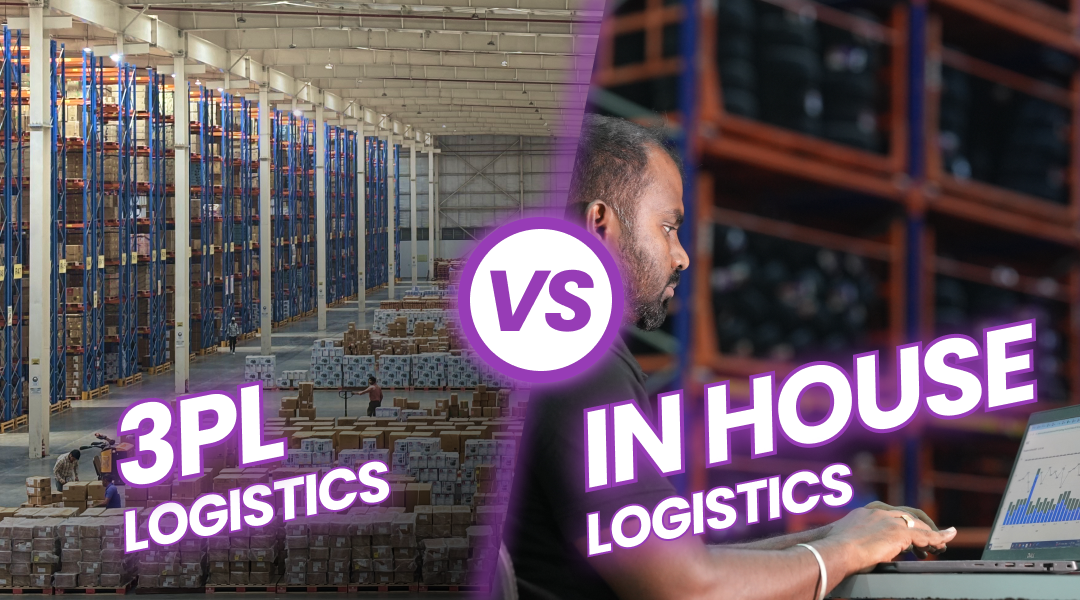
3PL vs In-House Logistics: What’s the difference?
One of the most common questions businesses ask is whether logistics should be managed internally or outsourced. For a more detailed comparison of the two approaches, see our guide to in-house logistics vs 3PL.
While there is no universal answer, the decision often depends on operational complexity, business scale, infrastructure requirements, and long-term objectives.
| Factor | In-House Logistics | 3PL Provider |
|---|---|---|
| Infrastructure | Owned and managed internally | Managed by an external provider |
| Capital Investment | Higher upfront investment | Typically lower infrastructure burden |
| Scalability | Dependent on internal capacity | More flexible and scalable |
| Logistics Expertise | Built internally | Access to specialized expertise |
| Technology | Requires separate investment and management | Often available as part of the service |
| Geographic Expansion | Requires additional infrastructure | Can leverage existing networks |
For some businesses, a hybrid approach may also be suitable depending on operational requirements, existing infrastructure, and the level of logistics control they want to retain.
How to choose the right 3PL partner
Selecting a logistics partner involves much more than comparing pricing models.
Businesses evaluating providers should consider infrastructure scale, technology capabilities, industry expertise, service reliability, geographic reach, and the ability to support future growth. Comparing providers against these criteria can help organizations make a more informed decision.
Industry Experience
Experience within a specific industry can provide a better understanding of operational requirements, compliance considerations, service expectations, and common supply chain challenges.
Infrastructure & Network Reach
Warehousing locations, transportation coverage, and distribution capabilities should align with business requirements and customer markets.
Businesses should also consider whether a provider can support expansion into new locations without requiring significant changes to the logistics model.
Technology Capabilities
Visibility, reporting, inventory management, shipment tracking, and operational analytics have become increasingly important evaluation criteria.
The right technology infrastructure can help businesses monitor operations and make faster, data-driven decisions.
Scalability
A logistics partner should be capable of supporting business growth without requiring major operational changes every time volumes increase or new markets are added.
Service Reliability
Consistency often becomes more important than short-term cost savings.
Businesses should evaluate communication standards, operational transparency, performance monitoring, and the provider’s ability to adapt to changing market conditions and future requirements.
Integrated Capabilities
Businesses should also consider whether the provider can coordinate multiple logistics functions through a connected operating model.
When warehousing, transportation, inventory, fulfilment, and distribution are managed through integrated processes, businesses can reduce coordination challenges and gain greater visibility across their supply chains.
Why integrated 3PL solutions matter
Supply chains today involve multiple moving parts that need to work together effectively.
Warehousing, transportation, fulfilment, inventory management, and distribution can no longer operate in isolation if businesses want to maintain visibility and operational efficiency.
This is why many organizations prefer integrated logistics models where different supply chain functions operate through a connected framework rather than a fragmented network of service providers.
An integrated approach can improve coordination, streamline communication, and provide better visibility across logistics operations. It can also make it easier to scale logistics capabilities as business requirements change. Businesses looking to understand this approach in greater detail can explore our guide to integrated supply chain solutions in India.
Businesses looking for an integrated logistics model can explore Apollo Supply Chain’s 3PL solutions to understand how warehousing, transportation, fulfilment, inventory management, and technology can work together within a single operating framework.
Final Thoughts
Very few businesses set out to become logistics experts. Their focus is usually on manufacturing products, serving customers, growing market share, or expanding into new regions.
As operations become more complex, managing logistics efficiently often requires specialized expertise, infrastructure, technology, and operational resources.
A capable 3PL provider can help businesses navigate that complexity while improving visibility, operational efficiency, and scalability. More importantly, the right partner can support long-term growth without requiring businesses to continuously invest in additional logistics infrastructure.
For organizations looking to strengthen logistics performance, partnering with Apollo Supply Chain can be an effective way to build a more agile and resilient supply chain.
Frequently Asked Questions (FAQ's)
What does 3PL stand for?
3PL stands for Third-Party Logistics. It refers to outsourcing logistics functions such as warehousing, transportation, inventory management, fulfilment, and distribution to an external provider.
What services does a 3PL provider offer?
Services can include warehousing, transportation management, inventory management, order fulfilment, distribution, returns management, and other value-added logistics activities, depending on business requirements.
Why do businesses use 3PL services?
Businesses may outsource logistics to improve operational efficiency, access specialized expertise, increase scalability, gain better supply chain visibility, and reduce the infrastructure burden associated with managing logistics internally.
Which industries use 3PL services?
Industries such as automotive, retail, e-commerce, FMCG, pharmaceuticals, healthcare, and industrial manufacturing commonly use third-party logistics services. However, the specific requirements vary by industry and business model.
How do I choose the right 3PL partner?
Businesses should evaluate a provider’s industry experience, infrastructure, geographic reach, technology capabilities, scalability, service reliability, and ability to integrate multiple logistics functions before making a decision.
Can a 3PL provider manage both warehousing and transportation?
Yes. Many 3PL providers can manage multiple logistics functions, including warehousing and transportation, through an integrated operating model. This can simplify coordination and provide greater visibility across logistics operations.
Is 3PL suitable for growing businesses?
3PL can be suitable for growing businesses that need to expand logistics capacity, enter new markets, manage changing order volumes, or access specialized logistics capabilities without building all the required infrastructure internally.